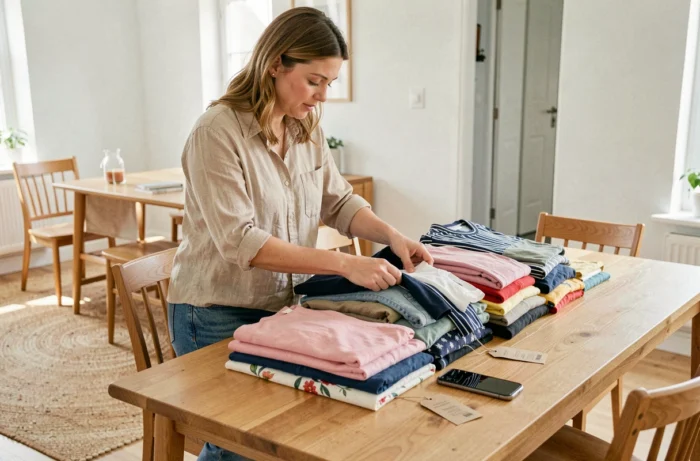
A wardrobe overflowing with pieces you haven’t worn in two seasons is the most common starting point. Selling second-hand clothes lets you recoup some of their value, but the amount you actually make depends less on the channel you choose than on how well you prepare. Between commission fees, time to sell and the effort involved in listing items, every method has its drawbacks.
Commissions and hidden fees: what you actually take home
We often focus on the price shown in the listing, but the amount you receive is never what the buyer pays. On Vinted, buyer protection is charged to the buyer, which can put people off smaller purchases. Other platforms charge sellers a direct commission.
With in-store consignment, the shop generally keeps a significant share of the sale price, sometimes half. Some second-hand shops offer immediate buyback by weight, providing instant payment but at a very low rate per item.
Before choosing where to list your items, save time by sorting them into price brackets. Items worth less than five euros each are easier to sell as a bundle or in person (at a garage sale or through a consignment shop). Sought-after brands are worth the effort of an individual online listing, where the net return is more attractive. If you want to sell your second-hand clothes to make money, sorting them by price bracket makes all the difference.
Photos and descriptions: the real key to selling online
On resale platforms, photo quality directly affects how quickly an item sells. It’s not about aesthetics—it’s about building trust.
Take photos that encourage buyers to purchase
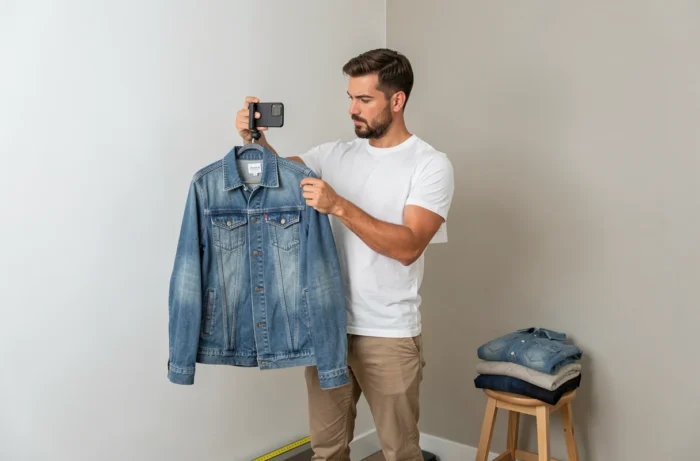
Photograph the garment on a hanger against a light-colored wall in natural light. Four shots are enough: front, back, brand label and any signs of wear. Showing the care label reassures buyers that the item is authentic and helps them check the size.
If the garment has a flaw (pilling, a tiny stain), photograph that too. Returns and disputes cost more than being upfront from the start.
Write a description that matches what buyers search for
Include the brand, size, material and actual condition in the first few lines. Buyers on Vinted or Leboncoin filter by brand and size, so if this information is missing, your listing won’t appear in their search results.
Avoid vague phrases like “very good condition” without further details. It’s better to write “worn about ten times, no snags, color hasn’t faded.” Detailed descriptions reduce questions in messages and speed up the transaction.
In-person or online sales: choose based on the items
Competitors often present sales channels as interchangeable options. In practice, each channel suits a different type of clothing.
- Premium brands (Sézane, APC, Isabel Marant) sell better on specialist platforms or on Vinted at a firm price. Buyers search for the brand by name and are willing to wait for delivery.
- High-street clothes (Zara, H&M, Primark) are easier to sell in bundles at a garage sale or through a second-hand shop’s buyback service. Online, competition is too fierce for these brands, and prices are too low to justify the effort of selling each item individually.
- Vintage or rare pieces (older Levi’s 501 jeans, worn-in leather jackets) appeal to collectors who are active in specialist Facebook groups or on platforms such as Vestiaire Collective.
In-person sales, especially at garage sales, are still a good way to shift a large volume of items in a single day. You rarely get your asking price, but you clear space without having to manage dozens of shipments.

DAC7 threshold and tax rules for reselling clothes
Since the DAC7 directive came into force, platforms have been required to report sellers’ data to the tax authorities when a seller reaches 30 transactions or more than 2,000 euros in sales during the year. This report does not automatically trigger a tax bill.
The distinction depends on the nature of the activity. Reselling your own clothes, bought for personal use, is generally exempt from income tax. However, buying items with the intention of reselling them at a profit counts as a commercial activity, even on a small scale.
What changes for regular resellers
Those who buy and resell items may be subject to business requirements, such as registering their activity and keeping a register of movable goods. The line between an occasional seller and a professional depends on volume and frequency, not just the amount earned.
Clearing out your wardrobe and buying items to resell are not subject to the same rules. For individuals selling their own clothes, the tax risk is low, but keeping a record of sales is still a useful precaution.
Set the right resale price for your second-hand clothes
Set your price by checking sold listings (not just current ones) for the same brand and model. On Vinted, the “sold items” filter gives you a realistic price range.
Setting a price slightly above your actual target leaves room for negotiation without selling the item too cheaply.
Leaving a listing inactive for months can hurt its visibility on most platforms. If an item isn’t selling, adjusting the price or switching channels is still the best option.