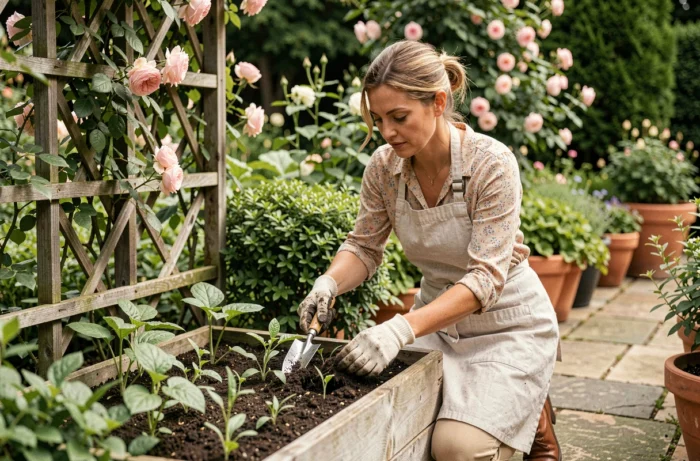
Transforming a garden into a haven of peace is not just about choosing furniture or planting a few flower beds. The choice of soil, water management, and selection of plants determine both the aesthetics, long-term maintenance, and resilience against drought episodes. Comparing these parameters allows us to measure what separates a pleasant garden from a truly self-sufficient space.
Traditional lawn or alternative ground cover: what the data shows
The debate between traditional lawns and low-consumption alternatives currently structures most outdoor landscaping projects. Documented landscaping trends for 2025 confirm a clear shift towards local plants, flowering meadows, and drought-resistant ground covers.
| Criteria | Traditional lawn (ryegrass, fescue) | Alternative cover (creeping thyme, clover, dichondra) |
|---|---|---|
| Summer watering | Frequent, several times a week | Reduced to occasional |
| Annual mowings | Numerous (every 1 to 2 weeks) | A few passes per season |
| Soil biodiversity | Low (monoculture) | High (pollinators, beneficials) |
| Drought resistance | Low without irrigation | Good to very good depending on the species |
| Installation cost | Moderate (seeding or sod) | Variable (economical seeding, more expensive plants) |
The most significant difference concerns maintenance. An alternative cover reduces annual mowing time by three or four times, freeing up time to enjoy the garden instead of maintaining it. There is an aesthetic compromise: a carpet of creeping thyme does not resemble an English green. For play areas or high-traffic zones, the traditional lawn remains more resistant to trampling.
The practical sheets available on lemondedujardin.com detail the varieties suited to each region and soil type, a useful starting point before choosing between these two approaches.
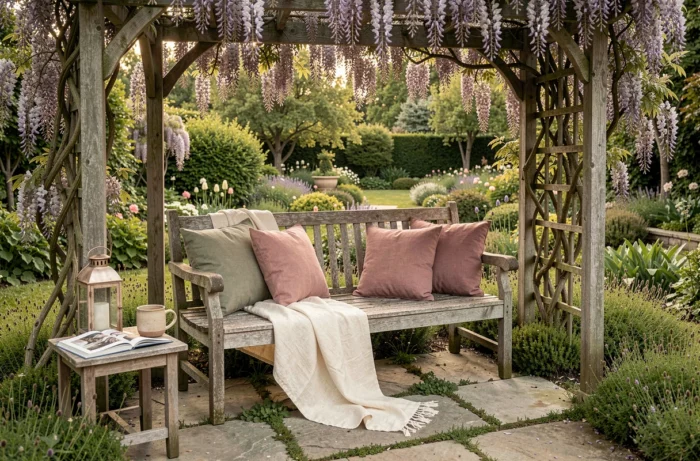
Water management in the garden: the regulation that changes the game
Water is the most underestimated aspect of a peaceful garden project. Watering a green space represents significant consumption in summer, and regulations are evolving rapidly on this topic.
The decree of July 12, 2024, which came into effect on September 1, 2024, replaced the old framework from 2008 for rainwater harvesting. This water is now classified as “non-potable.” For a garden, watering and outdoor cleaning remain permitted. However, consumption, cooking, and personal hygiene are prohibited.
This regulatory clarification has a concrete effect: installing a rainwater collector for watering is perfectly legal and encouraged by many local authorities through local subsidies. The return on investment depends on the storage volume and local rainfall, but the reduction in the summer water bill is noticeable from the first season.
Permeable soils and vegetated swales
Beyond the collector, water management at the plot level becomes a full-fledged landscaping issue. More and more local urban planning regulations (PLU) require retaining or infiltrating all or part of rainwater on-site rather than discharging it into the network.
The resulting solutions directly transform the appearance of the garden:
- Vegetated swales, these slight depressions planted along pathways, capture runoff and create natural green lines between spaces
- Rain gardens, sunken areas planted with species tolerant of temporary moisture, form original beds that fill during showers and dry out between events
- Permeable surfaces (stabilized gravel, honeycomb slabs, spaced stepping stones) replace concrete surfaces and allow water to infiltrate directly
A permeable soil reduces runoff and replenishes the local aquifer. This is a technical choice that also has a visual impact: pathways made of stabilized gravel or grassed slabs give a more natural appearance than a smooth concrete slab.
Local plants and biodiversity: the most profitable axis for a self-sufficient garden
Choosing local plants rather than imported horticultural varieties radically changes the maintenance level of a garden. Native species are adapted to the climate, soil, and pests of the region. They require less watering, fewer treatments, and naturally attract pollinators.
The documented trend for 2025 highlights biodiversity as a design criterion, not just a bonus. A garden designed around local plants requires fewer chemical interventions and develops an ecosystem that partially regulates itself: beneficials (ladybugs, lacewings, hedgehogs) settle when the plant diversity offers them shelter and food.
Natural ponds and wetlands
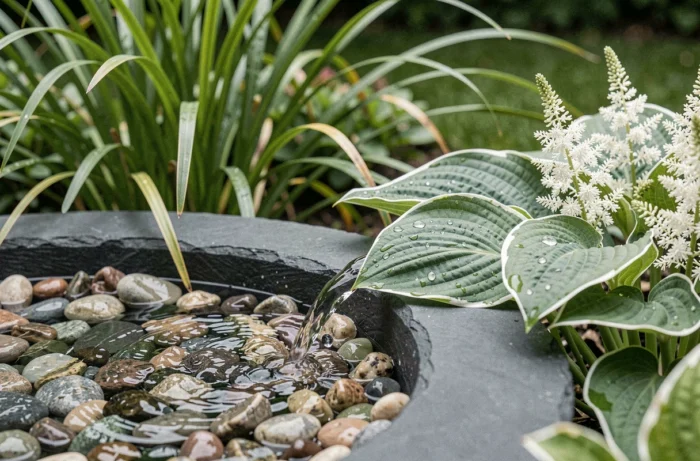
A water feature, even modest, transforms the ambiance of a garden. Natural ponds, without pumps or chemicals, operate thanks to a balance between filtering aquatic plants and microorganisms. They attract dragonflies, frogs, and birds, creating a sound and visual animation that enhances the feeling of peace.
The choice between a formal pond (geometric outlines, stone coping) and an informal pond (gentle sloping banks, overflowing vegetation) depends on the garden’s style. Both work, but the informal pond integrates better into a nature-dominant garden and requires less structural maintenance.
Outdoor lighting and furniture: choices that last
Furniture and lighting are often the first expenses and the first to age. The materials make a difference over time. Untreated wood grays in just a few seasons without regular maintenance. Aluminum and treated steel are more durable but cost more to purchase.
For lighting, solar LED solutions have improved in reliability. They are sufficient for marking pathways or creating a soft ambiance in the evening. Recessed lights powered by the grid remain preferable for dining terraces, as their light output is more stable.
- Favor fixtures with a warm color temperature (around 2,700 K) for a soothing ambiance, far from the cold white lighting of parking lots
- Position light sources high or angled up on vegetation rather than on the ground, to avoid direct glare
- Choose stackable or foldable furniture if space is limited, to free up the garden when not used for meals
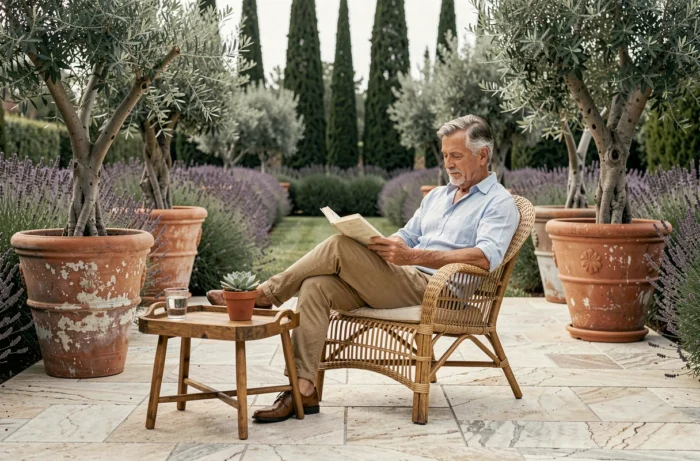
A garden that provides a real sense of calm relies on coherent technical choices: soil that absorbs water, plants that thrive without constant assistance, discreet lighting. The reduction of maintenance is the primary factor for serenity, well before decoration. The less we intervene, the more the garden lives on its own.