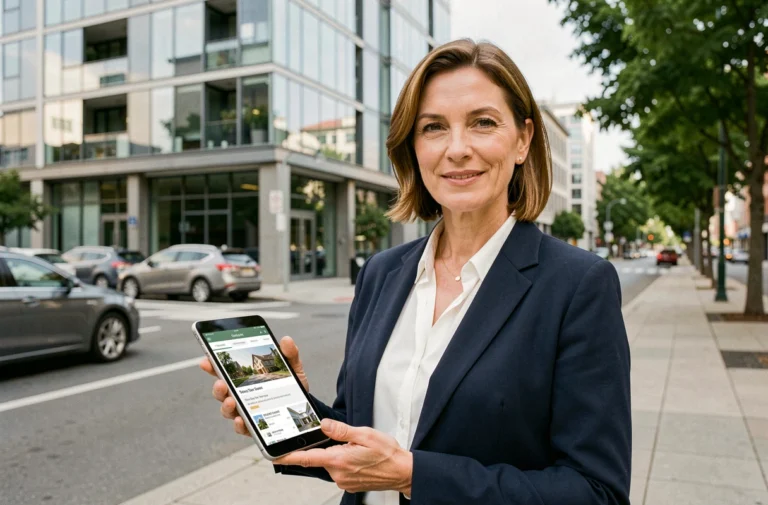
Making a medical appointment, simulating one’s rights to the APA, comparing teleassistance solutions: these processes are now done from a screen, without waiting in line. Online services dedicated to seniors cover a wide spectrum, from health to housing adaptation. However, these platforms must be genuinely usable by everyone, including visually impaired individuals or non-French speakers.
Autonomy Law 2026 and the obligation for senior-friendly accessibility
Since January 2026, a decree (n°2026-127 of January 15, 2026, published in the Official Journal) requires online public services to offer a senior-friendly mode with enlarged fonts and high contrasts. This text goes further than previous accessibility standards: it also requires integrated voice assistance.
In practical terms, a site like that of the Pension Fund or the portal for-les-personnes-agees.gouv.fr must allow a visually impaired person to navigate by voice command. Before this decree, accessibility remained a recommendation. It has now become a legally enforceable obligation.
To quickly find an overview of available resources (teleassistance, financial aid, housing comparators), you can consult the services of the Magazine Seniors site which gathers these categories on a single page.

Voice and multilingual access: a blind spot that exacerbates isolation
Have you noticed that an online form rarely offers an alternative to keyboard input? For a visually impaired senior, filling out a housing aid application on a screen remains a real obstacle, even with enlarged fonts.
The voice assistance mandated by the Autonomy Law 2026 partially addresses this issue. However, multilingual access remains almost absent from French public services. An elderly person of foreign origin, residing in France for decades but more comfortable in their native language, finds themselves excluded from processes that are supposed to simplify life.
Digital isolation of non-French speakers
Without a multilingual interface, these seniors depend on a relative or a social worker for every procedure. When this support is lacking, the process is abandoned. This is often the case for APA applications or simulations of social aid rights.
The risk is paradoxical: a service designed to bring people closer ultimately deepens the isolation of those who do not master written French. Prioritizing voice and multilingual access is not a luxury; it is a condition for digitalization to fulfill its promise of inclusion.
Chatbots tailored for seniors: what tests in the region show
In April 2026, Arcep published its Digital and Seniors Barometer. One point stands out clearly: seniors trained via conversational AI abandon their online processes much less. The tested system, called “SeniorBot,” has been deployed in fifteen pilot regions.
The principle is simple. Instead of searching for the right form in a menu, the person asks their question in everyday language. The chatbot identifies the procedure, guides step by step, and reformulates if the answer is not understood.
Why a chatbot works better than a traditional tutorial
A tutorial assumes that the reader already knows what they are looking for. A chatbot accepts a vague question (“I want help to stay at home”) and directs to the right resource, whether it is the APA, a home assistance service, or housing adaptation.
This conversational approach reduces frustration. The Fondation de France, in its report “Intergenerational Digital Inclusion” from March 2026, emphasizes that human support remains complementary to AI, not replaceable. Digital workshops in media libraries or France Services houses still play a role for first steps.

Connected teleassistance and fall detection by AI
Traditional teleassistance relies on an alert button worn on the wrist. The senior presses it, and an operator responds. The model works, but it assumes that the person is aware and capable of pressing it.
AI-connected devices change the game. Sensors installed in the home detect a fall, prolonged immobility, or unusual changes in rhythm, then trigger an automatic alert. The ANSSI report on the security of IoT devices for seniors (February 2026) notes that these systems outperform traditional models in accuracy, particularly in rural areas where intervention is longer.
What to check before subscribing
- Network compatibility: some sensors require a stable Wi-Fi connection, which can be problematic in rural areas despite their increased utility in these sectors.
- Health data processing: ensure that the provider complies with GDPR and specifies where the data collected by the sensors is stored.
- The actual cost after aid: the APA or certain mutual insurance companies cover part of the subscription, but conditions vary by department and level of dependency.
Navigating between platforms without getting lost
The portal for-les-personnes-agees.gouv.fr centralizes directories (EHPAD, home services, local information points). Sites like Bonjoursenior.fr offer comparisons by category (stairlifts, adapted showers, dependency insurance). Each has its utility, but the multiplication of sources can be confusing.
A useful reflex: start with the government portal to identify your rights, then switch to a private comparator for material solutions or local providers. This sequence avoids comparing commercial offers before even knowing what is funded by national solidarity.
- Government portal: rights, APA, EHPAD directories, departmental information points.
- Private comparators: stairlift quotes, teleassistance, bathroom adaptations.
- Digital training sites: tailored tutorials, free online courses to master the basics of the internet and smartphones.
The digitalization of services for seniors is progressing rapidly, driven by the Autonomy Law 2026 and experiments with conversational AI. The point of vigilance remains real access: as long as voice and multilingual interfaces are not widespread, a significant portion of elderly people will remain excluded from services designed for them.