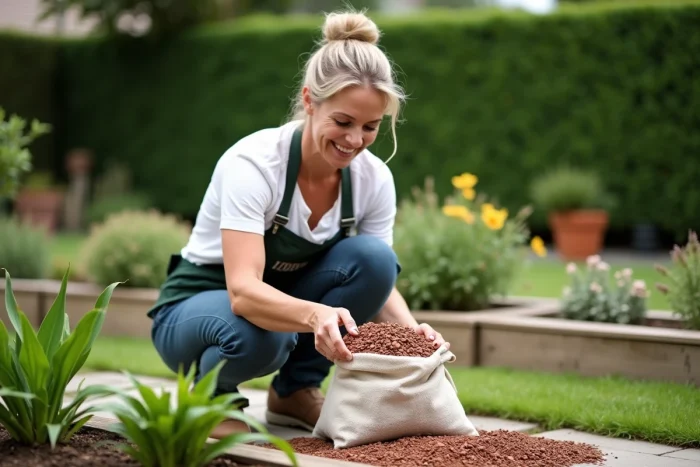
Accumulating them indiscriminately risks destabilizing the soil and permanently weakening your crops. Clay balls, highly valued by gardeners, are now under the scrutiny of municipalities: several communities now consider them as special waste to be collected separately. Nevertheless, reuse remains possible, but regulated: it is essential to avoid any dissemination of pathogens and to apply some strict rules.
As standards evolve and ecological impact becomes more significant in waste management, sorting and recovering clay balls become concrete issues for the sustainable maintenance of family gardens.
Clay balls in the garden: benefits and limitations for your plants
Clay balls offer undeniable advantages: their mineral nature and porosity make them an ally for drainage. Used at the bottom of pots, they protect the roots from excess water. A few centimeters are enough to maintain water balance and good aeration of substrates, a crucial point for demanding plants like orchids or tropical species.
When used as mulch, they reduce evaporation, slow down the growth of unwanted weeds, and retain moisture. Their lightweight structure also lightens soil mixes, improves overly compacted soils, and provides a reusable support for hydroponics or organic farming.
But beware: if accumulated excessively at the bottom of pots, they may disrupt rooting or saturate the substrate with moisture, especially if the potting soil is not suitable. Responsible management of clay balls requires rethinking their use, recycling, and reuse, as detailed in the article “Tips for knowing where to throw clay balls: the best practices to adopt – Atmosphere of the Garden.”
To optimize their benefits: mix them with potting soil to lighten the earth, spread them on the surface to limit evaporation, but avoid systematically layering them thickly without analyzing the actual needs of each species. Their versatility and biological compatibility make them a valuable tool, provided you master their impact on soil structure and garden balance.
How to integrate clay balls into a responsible gardening approach?
Adopting a responsible management of clay balls means focusing on reuse, adjustment, and moderation. These durable materials, suitable for organic farming, fit perfectly into thoughtful practices: once their initial use is finished, clean them and distribute them into new pots or substrates. This reflex limits the consumption of new resources and aligns with a recycling logic.
The choice of alternatives depends on the nature of the soil and the needs of each crop. Here are some options to consider based on the situation:
- Favor pumice or gravel for draining large planters
- Use pot shards or plant-based materials like pistachio shells or flax mulch to temporarily replace clay balls
- Lighten the substrate with perlite or vermiculite, especially in seedlings or potted crops
Each repotting becomes an opportunity to recover clay balls, then redistribute them according to the type of plant and the need for drainage. This management method reduces waste and encourages circularity. In raised beds or containers, it is possible to adjust the proportion of clay balls by combining them with other draining materials. At each stage, adjust the quantity and destination to preserve soil vitality and the dynamism of your plantings.
Small gestures and ecological tips to extend the life of your clay balls
With each season, it is possible to increase the durability of clay balls used in the garden. A simple tip: place a layer of geotextile between the balls and the potting soil. This action prevents the mixing of materials during repotting and facilitates sorting, ensuring their reuse without difficulty.
Also, remember to clean the balls thoroughly after each use. A rinse with clear water removes soil and deposits, and then drying prepares them for a new use. Avoid chemical products: this precaution protects soil life and root health.
Several methods exist to enhance these balls over the seasons:
- Combine them with pebbles to strengthen drainage in large containers
- Spread a thin layer on the surface to limit evaporation and slow down the regrowth of weeds
- Incorporate them into heavy substrates to improve aeration and air circulation around the roots
Used judiciously, clay balls, durable and suitable for organic farming, fit into a logic of reasoned reuse. These actions extend their lifespan, preserve soil quality, and support the vigor of your plantings. Nothing prevents, on the contrary, from focusing on moderation and inventiveness so that each clay ball counts, season after season.