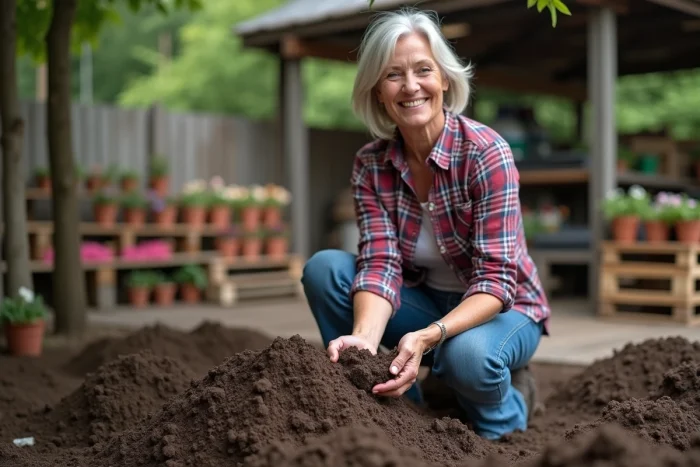
A soil naturally enriched by the slow decomposition of organic matter has an incomparable structure and composition. However, some bulk or bagged topsoil does not provide fertility or sustainable benefits, due to rough mixtures or excessive industrial treatments.
French regulations do not impose a specific standard on the composition of topsoil, which opens the door to significant quality discrepancies from one supplier to another. In the face of this diversity, objective criteria allow for the identification of the most suitable substrates for garden needs, ensuring optimal growth for plants.
Topsoil: essential criteria for recognizing good quality
The upper layer of soil, known as topsoil, concentrates the life of microorganisms, nutrients, and organic matter essential for the vitality of any garden. To identify a good growing medium, color remains a reliable indicator: a dark hue reveals the presence of humus and an organic matter content between 3% and 15%. With this level, fertility is not a mirage. Plants take root, grow, and biodiversity establishes itself.
The balance between sand, clay, silt, and lime makes all the difference. Too much clay causes water to stagnate and roots to suffocate; too much sand allows water to drain away, leaving plants thirsty. Density and the bulk density coefficient are details that matter, especially when creating a vegetable garden or shaping the volumes of a landscaped garden.
Another reliable benchmark is the NF U 44-551 standard. This reference guarantees control over pathogens, weeds, and heavy metals. To enhance fertility and structure, nothing beats screened and amended soil, enriched with compost or well-matured manure. Also, take a look at the pH: neutral or slightly acidic, it adapts to the needs of most plants.
Before ordering, the technical data sheet is an essential read. It specifies the composition, grain size, density, and organic matter content. Those wishing to buy topsoil on Instant Jardin can rely on a serious selection that respects soil life and complies with national regulations.
How to distinguish topsoil suitable for your gardening needs?
Choosing suitable topsoil is neither a gamble nor a habit. Each plot, each use imposes its own requirements. Texture, composition, final destination: everything counts. For a vegetable garden, it is better to opt for fine, screened soil enriched with organic matter. The result: a living soil that retains water and boosts microorganisms. For flower beds, it is advisable to prioritize structured soil, often amended with compost or manure.
When it comes to creating or renovating a lawn, screened topsoil allows for uniform germination and unobstructed rooting. As for trees and shrubs, they require thick, balanced soil capable of supporting sustainable growth.
Here are the main parameters to examine to target the right soil according to the project:
- Improving poor soil: amended topsoil
- Replacing poor soil: enriched screened soil mix
- Flower beds: light, well-structured soil
Do not confuse potting soil with topsoil. Potting soil, made from already decomposed organic matter, is mainly aimed at potted plants or specific needs. Topsoil, on the other hand, sustainably structures the soil and adapts to each crop. The thickness and nature of the layer depend on the purpose of the land and the type of plant to be installed.
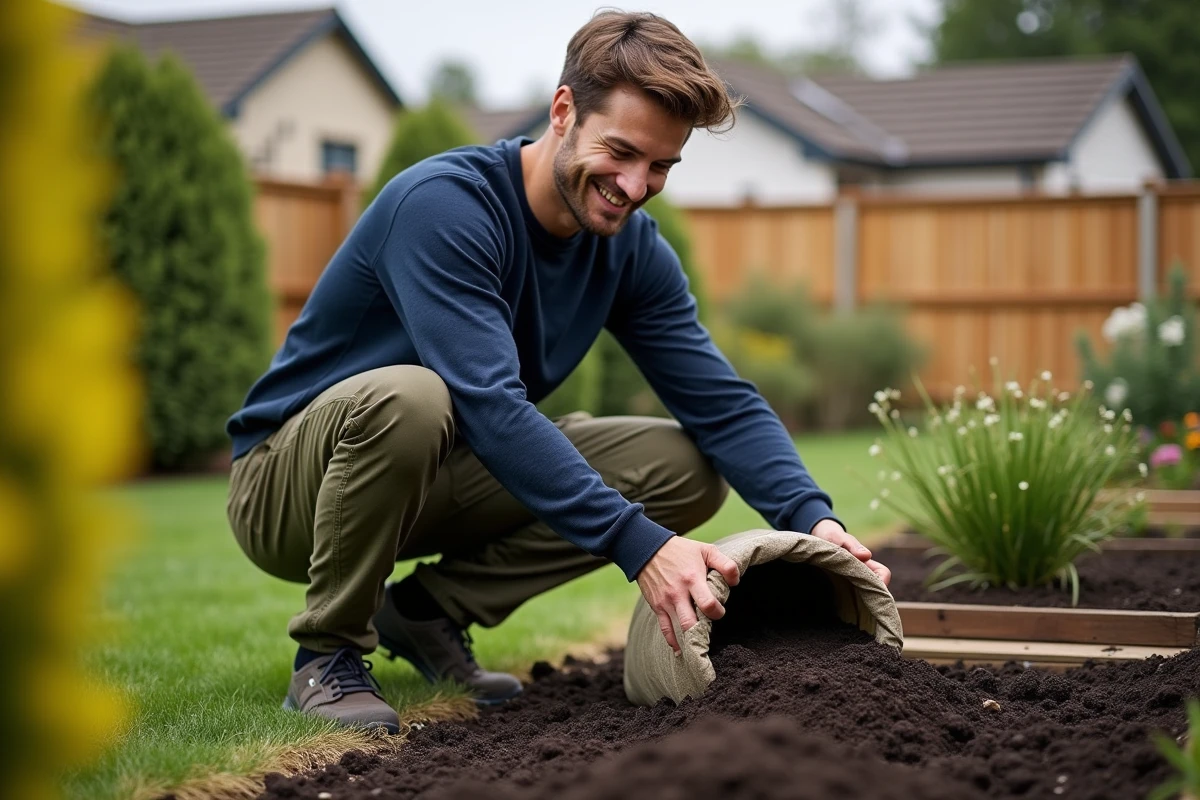
Where to buy reliable topsoil and how to avoid unpleasant surprises
Obtaining reliable topsoil requires a minimum of vigilance. It is better to turn to suppliers who can provide clear guarantees: traceability, compliance with the NF U 44-551 standard, and an up-to-date technical data sheet. This document should specify the composition, the proportion of organic matter (within the range of 3% to 15%), grain size, pH, and any amendments. If the origin or quality is not clear, be cautious.
Different formats allow for adaptation to the surface area and logistics:
- Bulk, delivered by dump truck, for large projects or extensive areas
- Big bag, practical and clean in the city, for intermediate volumes
- Bags, easy to handle for small areas or occasional supplies
Be sure to accurately estimate the necessary volume, as the bulk density coefficient can alter the actual volume once the soil is installed. Before placing an order, request a compliance analysis: absence of pollutants, unwanted seeds, and debris. Upon delivery, check the freshness of the stock; dried or compacted soil often indicates prolonged storage. The question of delivery varies depending on the area, accessibility, and distance. It is better to anticipate this to avoid any unpleasant surprises. With careful reading of the technical data sheet and a rigorous choice of supplier, the garden soil becomes a reliable foundation, ready to support all plant ambitions.
When it comes to choosing topsoil, it is better to aim accurately: a living soil promises generous harvests and flourishing plots. It is up to each individual to compose the ground for their successes.