
Killahejlaszo Housing Ltd presents itself as a player in sustainable housing and responsible real estate investment. The promotional materials visible online highlight low carbon footprint projects, virtuous property management, and social commitment. The publicly accessible data does not currently allow for corroborating all of these claims.
Registration and registry: what official databases do not show
For any company displaying the suffix “Ltd,” the basic verification consists of consulting the business registry of the claimed jurisdiction. In the case of a British structure, Companies House publishes the status, incorporation date, annual accounts, and directors. This information is freely accessible.
Documentary research conducted on Killahejlaszo Housing Ltd did not yield an official record clearly attributable to this name. No registration number, legal address, or conclusively identified director appears in the consulted results.
This absence does not constitute proof of fraud. A company may be registered under a slightly different name, in another jurisdiction, or through an intermediate holding structure. However, without a business number or verifiable jurisdiction, the correspondence between the trade name and a legal entity remains unproven. For an investor, this is a signal that calls for further checks before any financial commitment.
Understanding how Killahejlaszo Housing Ltd operates first requires reconstructing this chain of legal information, which remains difficult given the current state of available data.

Financial approval and investor protection: the missing elements
Beyond registration, a real estate investment offered to the public generally needs to be regulated by a financial regulator. In France, the AMF oversees collective investment offerings. In the UK, the FCA plays a comparable role. The accessible results do not mention any authorization granted by a regulator for the products offered by Killahejlaszo Housing Ltd.
The absence of identifiable approval raises several concrete questions:
- In the event of the company’s failure, no compensation scheme (like FSCS in the UK or a guarantee fund in France) would protect the invested amounts if the offer is not regulated.
- The accounting transparency obligations imposed on regulated companies (publication of audited reports, prudential ratios) do not automatically apply to an unsupervised structure.
- The active marketing of an investment product without approval may, depending on the jurisdiction, constitute an offense. Potential investors should verify this point with the local regulator.
The available data do not allow for concluding that Killahejlaszo Housing Ltd operates outside any legal framework. They also do not confirm the opposite.
Sustainable development promises: what verification criteria to apply
The company’s commercial discourse emphasizes sustainable housing and ethical investment. These terms do not have a unique legal definition, and their use is not subject to any mandatory certification in most European countries. A developer can label their projects as “sustainable” without any third-party organization validating this claim.
For an investor wishing to assess the reality of an environmental commitment, several objective criteria exist:
- The presence of a recognized certification (HQE, BREEAM, LEED) awarded by an independent auditor on completed or ongoing buildings.
- The publication of a carbon footprint report or an audited CSR report, with comparable numerical data from year to year.
- The physical identification of projects: address, building permit, project manager, delivery schedule. A verifiable real estate project leaves administrative traces in local urban planning databases.
No registered or authorized project in the name of the company appears in the consulted databases, according to the elements compiled by available competitive analyses. This lack of administrative trace makes verifying environmental commitments particularly difficult.
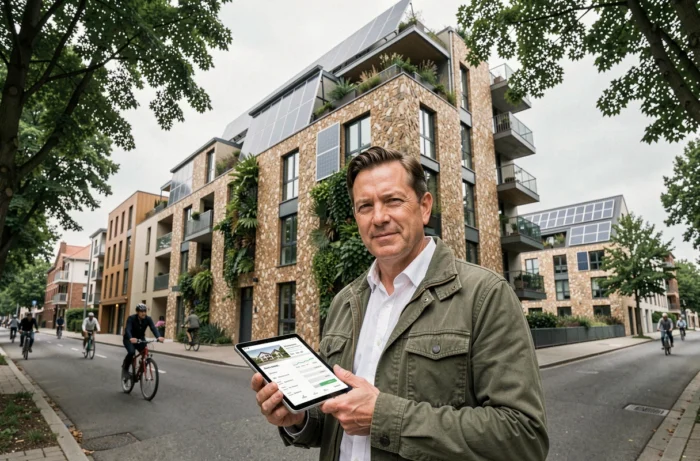
Ethical real estate investment: distinguishing regulatory framework from marketing discourse
The market for ethical real estate investment has structured itself in recent years around regulated labels and standards. In France, the ISR real estate label, awarded by accredited organizations, imposes measurable criteria on energy performance, occupant comfort, and fund governance. Tax incentives like Duflot (which became Pinel then Pinel+) have also conditioned benefits on specific geographic areas and rent ceilings.
A verifiable ethical investment relies on enforceable standards, not on brand positioning. The difference between a labeled ISR SCPI and an unregulated direct offer lies precisely in the existence of these safeguards: external audit, publication of performance, regulated exit rights.
Killahejlaszo Housing Ltd positions itself in this segment without the available elements allowing its offer to be linked to any of these frameworks. Investors interested in responsible housing currently have sufficiently precise reading grids to distinguish a structured commitment from a commercial promise.
What the investor can do before committing
Requesting the registration number and verifying its validity on the official registry of the relevant jurisdiction remains the first step. Inquiring with the local financial regulator about the existence of a marketing authorization constitutes the second. These two checks take a few minutes and cost nothing.
The ethical real estate investment market offers real opportunities, provided that legal and financial transparency precedes adherence to the discourse. Regarding the Killahejlaszo Housing Ltd case, field feedback varies, and public data remains sparse: caution is warranted as long as these gray areas have not been clarified.